How Balancing Changed My Daily Life — And Can Change Yours Too
You don’t need intense workouts to feel stronger and more in control. For months, I struggled with small stumbles, fatigue, and that nagging sense of being off—until I discovered the quiet power of balance training. It’s not just for athletes or older adults; it’s a foundational skill that reshapes how your body moves and responds every day. What started as simple standing exercises led to surprising improvements in focus, stability, and overall energy. Balance, once invisible in my routine, became the anchor of my daily well-being. This is not about dramatic transformations or extreme fitness goals. It’s about reclaiming a basic human ability that quietly supports everything we do—from walking down the hallway to reaching for a high shelf, from playing with grandchildren to carrying groceries without strain. The truth is, balance is not something we lose only with age. It’s a skill we can strengthen at any stage of life, and doing so can transform how we feel in our bodies every single day.
The Hidden Problem: Why Poor Balance Affects Everyone
Most people only notice their balance when something goes wrong—a near fall, a stumble on the stairs, or the awkward wobble when standing up too quickly. But poor balance often develops silently, eroded over time by lifestyle habits that go unnoticed. Prolonged sitting, lack of varied movement, and even the types of shoes we wear can dull the body’s natural ability to stay upright and responsive. When we spend hours each day in chairs, our muscles weaken, our joints stiffen, and our nervous system receives fewer signals about where our body is in space. This gradual decline isn’t dramatic, but it’s real. Over time, the body compensates—leaning slightly, gripping railings more tightly, or avoiding uneven surfaces altogether. These subtle changes are early signs that balance is slipping.
Balancing is not just a physical act; it’s a complex coordination between multiple systems in the body. The inner ear, eyes, and sensory receptors in the muscles and joints all send constant signals to the brain about our position. When these systems are underused or out of sync, even small disruptions—like stepping off a curb or turning quickly—can throw us off. Many people assume balance is only important for older adults, but that’s a misconception. Poor balance can affect anyone, regardless of age. A young parent carrying a child up the stairs, a middle-aged professional standing during a long meeting, or someone walking on a slippery sidewalk—all rely on balance without realizing it. The truth is, balance is a foundational skill, as essential as strength or endurance, yet it’s often overlooked in daily health routines.
Recognizing the early signs of imbalance is the first step toward improvement. If you find yourself holding onto walls or furniture more than before, feeling unsteady when standing on one leg, or needing extra caution on stairs, these are not just minor quirks—they are signals. Even small stumbles or the need to catch yourself during routine movements indicate that your body is working harder than it should to stay upright. The good news is that balance is not a fixed trait. It’s a skill that can be retrained, refined, and strengthened at any age. By addressing balance early, before it leads to a fall or injury, you can improve not only safety but also confidence, mobility, and overall quality of life.
Beyond the Gym: What Balance Training Really Is
Balancing training is often misunderstood as something only for older adults or elite athletes. In reality, it’s a practical, accessible form of movement that benefits everyone. It’s not about complex routines or expensive equipment. At its core, balance training is any activity that challenges your body’s ability to maintain control while standing, moving, or adjusting to changes in position. It can be as simple as standing on one foot while brushing your teeth or walking heel-to-toe down a hallway. These small actions force your body to engage muscles, nerves, and brain pathways that are often underused in daily life. Unlike high-intensity workouts that focus on strength or endurance, balance training enhances neuromuscular coordination—the communication between your brain and muscles that allows for smooth, controlled movement.
There are three main types of balance that can be trained: static, dynamic, and reactive. Static balance involves holding a position without moving, such as standing on one leg or maintaining a steady stance with eyes closed. This type of exercise builds awareness and control in a stable environment. Dynamic balance, on the other hand, involves movement while maintaining stability—walking on uneven ground, stepping over obstacles, or shifting weight from one foot to the other. This mimics real-life activities and prepares the body for everyday challenges. Reactive balance is the ability to respond quickly to unexpected shifts, like catching yourself when you slip or adjusting when someone bumps into you. While this type is harder to practice directly, it improves as the other two forms become stronger.
Balance training is not a fitness trend. It’s a fundamental component of functional movement—how we move safely and efficiently in the real world. It doesn’t require a gym membership or special attire. You can practice it at home, at work, or even in the grocery store line. The key is consistency and intention. By incorporating small balance challenges into daily routines, you train your body to respond more effectively in any situation. Over time, this leads to greater confidence, reduced risk of injury, and a stronger connection between mind and body. Balance is not just about staying upright—it’s about moving through life with greater ease and control.
The Science of Stability: How Your Body Stays Upright
Staying balanced is a remarkable feat of biological engineering. Every time you stand, walk, or shift your weight, your body performs thousands of micro-adjustments without you even noticing. These adjustments are made possible by three primary systems: the vestibular system in the inner ear, the visual system, and the somatosensory system. Together, they form a network of feedback that constantly informs your brain about your body’s position in space. The vestibular system acts like a built-in level, detecting motion and head position. The eyes provide visual cues about the environment—knowing where the ground is, whether surfaces are flat or sloped. The somatosensory system, which includes nerve endings in the skin, muscles, and joints, sends signals about pressure, touch, and limb position. When these systems work together seamlessly, balance feels effortless.
But when one system is impaired or receives less input, the others must compensate. For example, if you close your eyes, your body relies more heavily on the inner ear and joint feedback. If you’re on an unstable surface, like a boat or a foam pad, your muscles must work harder to make constant corrections. This is why balance can feel more difficult in low-light conditions or on uneven terrain—your brain has less reliable information to work with. Over time, if certain systems are underused, the body’s ability to integrate this information declines. This is especially common with aging, but it can also happen at any age due to inactivity or repetitive movement patterns.
The brain plays a central role in balance, acting as the command center that processes all incoming signals and sends out instructions to the muscles. This neural coordination is what makes balance a trainable skill. Just like learning to ride a bike or play an instrument, the more you practice, the better your brain becomes at interpreting and responding to balance challenges. Studies have shown that even short-term balance training can lead to measurable improvements in neural efficiency and muscle response time. This means that with consistent practice, your body can react faster and more accurately to changes in position. The science is clear: balance is not just about strong legs or good posture. It’s about the brain’s ability to process information and coordinate movement in real time.
Why Balance Training Transforms Overall Health
Improving balance has far-reaching benefits that extend well beyond preventing falls. When you train your body to stay stable, you also strengthen the core muscles, improve joint alignment, and enhance overall coordination. These changes reduce strain on the lower back, knees, and hips, leading to less pain and greater comfort in daily activities. Many people report reduced lower back discomfort after just a few weeks of consistent balance practice. This is because balance exercises engage the deep stabilizing muscles of the abdomen, pelvis, and spine—muscles that are often neglected in traditional workouts but are essential for good posture and spinal support.
Beyond physical improvements, balance training also enhances mental focus and body awareness. When you stand on one leg or walk heel-to-toe, you must pay attention to your body’s position and movement. This mindful engagement strengthens the connection between brain and body, improving proprioception—the sense of where your limbs are in space. Over time, this heightened awareness translates into smoother, more confident movement. You become more attuned to your body’s signals, making it easier to adjust your posture, avoid awkward positions, and move with greater control. This is especially valuable for parents, caregivers, or anyone who spends time in physically demanding roles.
Research supports the wide-ranging benefits of balance training. Studies have shown that regular practice reduces the risk of injury across all age groups, improves athletic performance, and enhances mobility in older adults. Even for younger, active individuals, better balance leads to more efficient movement patterns, reducing wear and tear on joints. The long-term impact is significant: maintaining good balance supports independence and quality of life as we age. It makes everyday tasks—like climbing stairs, getting in and out of a car, or carrying heavy bags—easier and safer. Balance is not just a physical skill; it’s a key component of lifelong health and vitality.
Simple Exercises Anyone Can Start Today
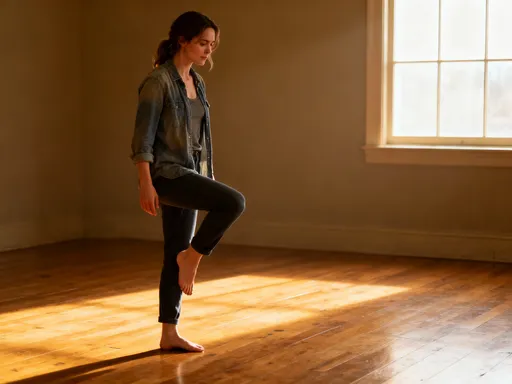
The best part about balance training is that it’s accessible to nearly everyone, regardless of fitness level or age. You don’t need special equipment or a lot of space. All you need is a few minutes a day and a willingness to practice. A great starting point is the two-footed stand: stand with your feet hip-width apart, arms at your sides, and focus on maintaining a steady posture. Hold for 30 seconds, then gradually increase the time. Once this feels stable, progress to standing on one foot. Lift one foot slightly off the ground and hold for 15 to 30 seconds. Use a wall or chair for support if needed. This simple exercise strengthens the ankle, knee, and hip stabilizers while improving body awareness.
Another effective beginner exercise is tandem standing—placing one foot directly in front of the other, heel to toe, as if standing on a tightrope. Hold this position for 20 to 30 seconds, then switch foot positions. This challenges your balance in a different plane and mimics the motion of walking. For a dynamic option, try tandem walking: take 10 slow, controlled steps, placing each foot heel to toe. This improves coordination and prepares the body for real-world movement. If you want to increase difficulty, try any of these exercises with your eyes closed. Removing visual input forces your body to rely more on inner ear and joint feedback, deepening the training effect.
For those ready to advance, slow step-ups are excellent. Use a low step or sturdy platform and step up with one foot, then bring the other foot up. Step down slowly, leading with the same foot. This builds strength and control in the legs while challenging balance. Perform 5 to 10 repetitions per side. Throughout all exercises, focus on slow, controlled movements and steady breathing. Avoid rushing or holding your breath, as this can increase tension and reduce effectiveness. The goal is not speed or intensity, but precision and awareness. With just 5 to 10 minutes a day, 3 to 5 times a week, you can make meaningful progress.
Integrating Balance into Daily Life Without Extra Time
One of the biggest barriers to starting a new health habit is finding the time. The good news is that balance training doesn’t require a separate workout session. It can be seamlessly woven into your existing routine through a strategy called habit stacking—pairing a new behavior with an established one. For example, while brushing your teeth, stand on one leg for 30 seconds, then switch. This small challenge takes no extra time and turns a daily task into a training opportunity. Similarly, when folding laundry, stand on one foot while placing clothes in a basket. These moments of practice add up over time, reinforcing balance skills without disrupting your schedule.
Other daily activities offer natural balance challenges. While waiting in line at the store, shift your weight from foot to foot or stand with your feet close together. When standing at the kitchen counter, try lifting one heel off the floor and holding for a few seconds. Watching TV? Use commercial breaks to stand on one leg or walk heel-to-toe across the room. Even getting in and out of a chair can be an opportunity to practice controlled movement—rising slowly without using your hands. These micro-practices may seem small, but they train your body to stay engaged and responsive throughout the day.
Environmental cues can also help build consistency. Place a small reminder near your bathroom mirror or on the fridge to prompt balance practice. Use a timer on your phone to track how long you can hold a single-leg stand. Over time, these small actions become automatic, turning balance training into a natural part of your day. The key is to make it invisible—so integrated into your routine that it doesn’t feel like an extra task. By using moments you already have, you eliminate the excuse of being too busy. Balance training doesn’t have to be a chore. It can be a quiet, consistent practice that enhances your life without demanding more time.
Tracking Progress and Staying Motivated
Improvement in balance is often subtle and may not be immediately noticeable. Unlike weight loss or strength gains, there’s no scale or mirror to show progress. That’s why tracking is essential. One simple way is to time how long you can stand on one leg with your eyes open, then closed. Record these times weekly. Even a five-second increase over a few weeks is a sign of progress. Another indicator is reduced reliance on support—going from holding a wall during exercises to using just a fingertip, then none at all. These milestones reflect real gains in stability and confidence.
Pay attention to real-life changes as well. Do you feel steadier on stairs? Are you catching yourself more quickly when you trip? Do daily tasks feel easier? These are non-scale victories that matter. Keeping a short journal to note these improvements can boost motivation. Writing down even small wins—like standing steadily while putting on socks—reinforces the value of the practice. Celebrating progress, no matter how minor, helps sustain long-term commitment.
Patience is crucial. Balance improvements build gradually, often in ways that aren’t obvious at first. It’s not a quick fix, but a lifelong skill. The benefits compound over time, leading to greater independence, reduced injury risk, and enhanced well-being. By making balance training a consistent part of your life, you invest in a foundation of health that supports everything else you do. It’s not about perfection—it’s about progress. And with each small effort, you’re building a stronger, more resilient body and a clearer, more focused mind. Balance is not just about staying upright. It’s about moving through life with confidence, control, and lasting vitality.