I kept saying 'I'll figure it out on the way'—until my map app started knowing me better than I knew myself
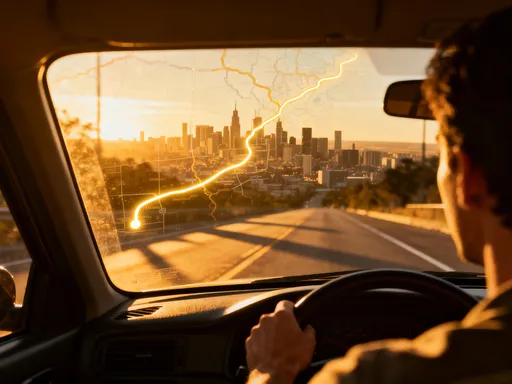
How many times have you driven in circles, pretending you’re “just exploring,” when you’re actually lost? Or missed a turn because the voice gave directions two seconds too late? I used to rely on memory, landmarks, and sheer luck—until I realized the app in my pocket wasn’t just showing me roads, but learning how I live. It started adapting—when I needed quiet routes, faster exits, or a coffee stop without me saying a word. This isn’t just navigation. It’s like having a co-pilot who finally gets you. And honestly, it changed everything.
The Old Way: Why We Used to Get Lost (Even with an App)
Remember those days when you’d punch in an address, hit start, and just… hope? I do. I remember driving to my daughter’s first ballet recital, convinced I had the route memorized, only to realize halfway there that I’d mixed up the studio with the dentist’s office across town. Panic set in. My hands gripped the wheel tighter. I could already hear the teacher’s voice: “We were expecting Lily at 4.” I opened the map app, but by then, traffic was thick, and the voice kept saying, “In 500 feet, turn left,” when I was already past that street. I missed the exit. Again. And again. It wasn’t just that one time. It felt like every trip had a moment like that—frustrating, avoidable, and completely out of my control.
Back then, map apps were smart in theory, but rigid in practice. They didn’t care if it was 8 a.m. and school drop-off madness was in full swing. They didn’t know I hated merging onto the highway near the mall because that ramp is always backed up. They treated me like every other driver—same voice, same route, same timing. No exceptions. No flexibility. I’d get those robotic reminders: “Recalculating…” as if the app was shrugging at me while I sat in gridlock, late for everything. The worst part wasn’t the wrong turn. It was the feeling of being at the mercy of a machine that didn’t understand my life at all.
And let’s talk about the mental load. Every drive meant constant decisions: Which route is faster today? Is construction still happening on Oak Street? Should I leave early just in case? I was always on high alert, scanning signs, second-guessing turns, and checking the screen every few seconds. It was exhausting. I’d arrive at my destination already tired, my shoulders tense, my mood frayed. That’s not how life should feel. Especially not when you’re trying to show up for your family, your job, or even just a quiet moment for yourself. I started to wonder—why does something as simple as getting from point A to point B have to feel so heavy?
The Moment Everything Changed: When My App Started Anticipating Me
Then, one rainy Tuesday, something shifted. I was heading to my son’s soccer practice—same time, same route I’d taken a dozen times before. But this time, halfway there, the app gently chimed and said, “Traffic ahead. Taking a quieter route through Elm Street.” I hesitated. Elm Street wasn’t on my usual path. But I trusted it. And within minutes, I realized why: the usual highway was jammed with emergency vehicles and flashing lights. I would’ve been stuck for twenty minutes. But thanks to that little detour, I arrived five minutes early, dry, and calm. I remember sitting in the car afterward, thinking, “Wait… did it just protect me from stress?”
That was the first time I felt it—like the app wasn’t just following me, but looking out for me. And it kept happening. One Friday, as I was leaving work, it said, “Low fuel. There’s a gas station two blocks ahead, same direction.” I hadn’t even checked the gauge. But sure enough, I was nearly on empty. Another time, on a Saturday morning, it suggested a scenic riverside road instead of the main highway. I took it, and we ended up stopping at a little farmers’ market we’d never seen before. My kids found fresh apple cider and handmade doughnuts. It felt like a gift—a surprise adventure baked into an ordinary day.
What really built my trust, though, were the small things. Like how it now avoids school zones during pickup hours. Or how it remembers I prefer surface streets over highways when I’m driving home after 6 p.m. Even better—it learned that I always park near the library when I go downtown, so now it guides me there automatically. I didn’t set any of this up. I didn’t have to. It just… noticed. And responded. That’s when it hit me: this wasn’t just a tool anymore. It was becoming part of my rhythm. Like a friend who pays attention and quietly makes things easier.
How It Learns: The Quiet Intelligence Behind the Screen
I know what you’re thinking—“Wait, is it watching me?” And I get it. The word “learning” can sound a little creepy if you’re imagining some robot tracking your every move. But here’s the truth: it’s not about spying. It’s about patterns. Think of it like this—when you go to the same coffee shop every Thursday morning, your barista starts remembering your order. They don’t need you to say it. They just know. That’s not invasive. It’s thoughtful. That’s what this technology feels like—thoughtful.
The app learns by noticing simple things: what time you usually leave for work, which routes you pick when it’s raining, where you tend to stop for gas or groceries. It sees that on weekends, you take longer drives with more stops. It notices you avoid certain highways during rush hour. Over time, it starts to predict what you might need—like suggesting a faster route when you leave later than usual, or reminding you to leave early if there’s heavy traffic on your kid’s school day. It’s not magic. It’s math with memory. And the more you use it, the better it gets—kind of like a good habit forming.
And here’s the part that matters: it doesn’t need your name, your photos, or your private messages to do this. It’s not sharing your location with advertisers or tracking your shopping list. It’s focused on movement—where you go, when, and how. And even that data is usually anonymized and protected. You can also control what it learns. Want to pause location history? You can. Want to clear your data? That’s an option too. This isn’t about giving up privacy. It’s about giving the app enough context to be helpful—like teaching a new assistant your preferences so they can support you better.
More Than Directions: How My Map App Became a Daily Life Partner
I used to think of my map app as just a way to avoid wrong turns. Now, I see it as something much bigger—a partner in managing my day, my stress, and even my family’s well-being. Take school mornings. They used to be chaos. I’d be rushing, coffee in hand, trying to get everyone out the door, only to hit a backup at the school loop. Now, the app knows the pattern. It sees that every Monday through Friday at 8:15 a.m., I’m heading to the elementary school. So it starts checking traffic earlier, rerouting if needed, and giving me a heads-up if something’s off. That five-minute warning? It’s saved me from late slips more times than I can count.
But it’s not just about getting there on time. It’s about arriving in a better state of mind. When the app takes a smoother, quieter route—fewer stops, less honking, no sudden merges—I arrive calmer. And that calm ripples out. I’m less short-tempered with the kids. I smile more. I’m present. That might sound small, but it’s huge. Because how we arrive matters just as much as when. One afternoon, after a particularly rough day at work, I was dreading the drive home. My head was full of emails and meetings. But the app sensed I was leaving later than usual and suggested a longer but less stressful route through the parkway. I took it. The trees were golden with fall color. The radio played something soft. And for the first time in days, I felt my shoulders drop. That drive didn’t just get me home. It reset me.
And let’s not forget the fun. Weekends used to involve a lot of “Where should we go?” debates. Now, the app sometimes surprises us. “Nearby parks with walking trails,” it’ll suggest. Or “Family-friendly restaurants within 10 minutes.” We’ve discovered a little nature trail with a butterfly garden, a bakery with the fluffiest cinnamon rolls, and a playground with the best swings in town—all because the app knew we liked short drives and outdoor stops. It’s like having a local friend who always knows the good spots. And honestly, those little discoveries have become part of our family’s happy memories.
Adapting to Me—And I Adapted Back
Here’s something I didn’t expect: as the app got smarter, I changed too. I used to plan every trip like a military operation—checking traffic the night before, printing directions (yes, I admit it), and packing backup snacks in case of delays. Now? I don’t plan as much. I trust the process. I’ll say, “Hey, let’s go to the lake today,” and just start driving. The app adjusts. It finds the best route, checks for closures, and even suggests a good place to grab lunch on the way. I feel freer. Lighter. Like I’ve handed off a mental burden I didn’t even realize I was carrying.
And because I’m not glued to the screen, I actually notice things. The way the sunlight hits the trees in the afternoon. The new mural on Main Street. My daughter pointing at a flock of geese flying south. I’m more present. I’m not just surviving the drive—I’m enjoying it. That shift has made a bigger difference than I thought possible. I’ve also noticed I’m less anxious overall. Decision fatigue used to drain me—especially on busy days with back-to-back errands. Now, with the app handling the “how” and “when,” I can focus on the “why.” Why am I going to the grocery store? To make my family’s favorite meal. Why am I driving to the library? To pick out new books with my son. The purpose comes back into focus.
It’s become a two-way relationship. The app learns from me—my habits, my preferences, my rhythm. And I’ve learned from it—how to let go, how to trust, how to move through the world with less resistance. It’s not about depending on technology. It’s about partnering with it. Like a good dance, where one leads, the other follows, and together, you make something smoother than either could alone. I’m not giving up control. I’m sharing it—with something that genuinely wants to help.
Real Tips: Getting the Most Out of Your Map App (Without Overthinking It)
You don’t need to be a tech expert to benefit from this. In fact, the less you overthink it, the better it works. Start simple. Make sure personalized settings are turned on—look for options like “personalized routes” or “learn my driving habits.” You don’t have to dive into every menu. Just flip the main switch. Then, let it watch you live a little. Take your usual drives. Make your usual stops. Don’t worry if you switch routes sometimes—that’s okay. The app learns from patterns, not perfection.
After a few weeks, you might start to notice little things—like faster suggestions, better detours, or smarter parking tips. That’s the system tuning in. If it suggests a route and you like it, say so—either out loud (“That was a good call”) or just by following it. The app picks up on what works. If it suggests something you don’t like, take your own route. It will notice that too. This isn’t about obeying. It’s about teaching. Think of it like training a helpful puppy—consistent feedback, gentle guidance, and lots of patience.
Don’t be afraid to let it surprise you. Try a recommended scenic route. Follow a suggestion for a nearby park or café. You might discover something wonderful. And if you’re worried about privacy, take a few minutes to review your settings. You can pause location history, delete old trips, or limit data sharing. You’re in charge. But give it a chance to work for you. The magic happens over time, not overnight. It’s like planting a garden—you don’t see the roots growing, but one day, you look down and there are flowers.
The Bigger Picture: Technology That Fits Around Life, Not the Other Way
When I think about how much this small change has improved my days, I realize it’s part of a bigger shift—one I’m grateful for. We used to bend our lives around technology. We’d stop to check our phones, reschedule plans because of bad GPS, or feel stressed by constant alerts. But now, I’m seeing the opposite. Technology is starting to bend around us. It’s learning our rhythms, respecting our time, and making space for what matters—family, peace, joy, presence.
The best tech doesn’t shout. It doesn’t demand attention. It listens. It adjusts. It helps you breathe easier, one turn at a time. It’s not about flashy features or complicated settings. It’s about quiet support—like a well-timed cup of tea, a warm coat on a cold day, or a friend who shows up without being asked. That’s what my map app has become. It’s not perfect. But it’s trying. And in its own small way, it’s making my life feel more manageable, more joyful, and more like mine.
So if you’re still saying, “I’ll figure it out on the way,” I get it. I used to say that too. But what if you didn’t have to? What if, instead of figuring it out, you were gently guided—through traffic, through stress, through the chaos of daily life—by something that’s learning what you need before you even ask? That’s not science fiction. It’s happening now. And it’s not just about getting somewhere. It’s about arriving as your best self—calm, confident, and fully there. That’s the kind of technology worth embracing. Not because it’s smart, but because it helps you be, too.