Tired of Gaming Marathons Wrecking Your Posture and Energy? These Apps Finally Made It Easy to Stay Healthy While Playing
Spending hours glued to your screen during gaming sessions? You're not alone. Many of us lose track of time, forget to stretch, or barely notice our slouching until our back aches. But what if your favorite pastime could actually help you move more and feel better? I used to ignore my body until fatigue hit—until I discovered gaming apps that gently remind me to breathe, stretch, and stand. Now, I play longer and feel stronger. Let’s explore how tech is quietly turning playtime into self-care.
The Hidden Cost of Gaming: When Fun Starts Harming Your Body
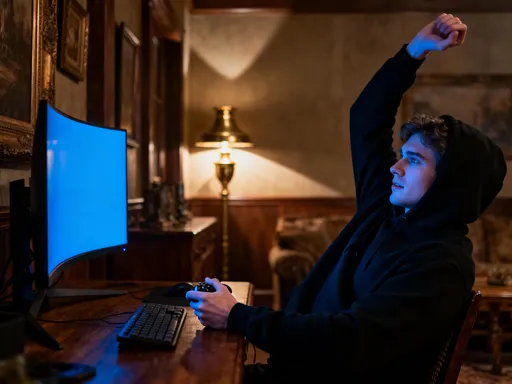
Let’s be honest—gaming is one of those rare escapes where time just slips away. One minute you’re starting a new quest, and the next, it’s 2 a.m., your neck feels like it’s made of stone, and your eyes are burning. I’ve been there more times than I’d like to admit. For years, I brushed off the stiffness, the headaches, even the tingling in my fingers, telling myself it was just part of the experience. After all, isn’t that what gamers do? Power through?
But here’s what I didn’t realize: every hour spent hunched over a screen, eyes locked on glowing pixels, was quietly chipping away at my well-being. It started small—just a stiff shoulder, a little lower back pain. Then it got worse. I’d wake up with a crick in my neck so bad I could barely turn my head. My concentration during the day dipped. I felt sluggish, even after a full night’s sleep. And the worst part? I blamed everything except my gaming habits.
One night, during a crucial boss fight, my vision blurred so suddenly I missed the final strike. I had to restart the whole level. That’s when it hit me: this wasn’t just about losing a game. My body was sending me a message, and I’d been ignoring it for too long. The truth is, gaming doesn’t have to come at the cost of your health. And thankfully, technology—yes, the very thing that got us into this—might also be the thing that helps us out.
A Wake-Up Call: How One App Noticed What I Ignored
I didn’t find this solution in a medical journal or a fitness influencer’s post. It came from a game I downloaded for fun—a casual puzzle app that promised five-minute brain boosts. Midway through a level, a soft chime played, and a little character popped up on the screen. “You’ve been still for 45 minutes,” it said gently. “Try a 1-minute stretch!”
My first reaction? Eye roll. Seriously? A game telling me to move? But something about the tone—kind, not scolding—made me pause. I wasn’t being punished. I wasn’t failing. It felt more like a nudge from a friend who cared. So, I stood up. I reached my arms overhead, rolled my shoulders, and touched my toes. Just a few simple moves. And when I sat back down, the difference was immediate. My shoulders didn’t ache. My neck felt looser. My mind felt clearer.
That tiny moment changed everything. I started paying attention to how my body felt during play, not just after. I learned that the app used motion sensors and play patterns to detect inactivity. It wasn’t guessing—it was noticing what I had trained myself to ignore. And it didn’t interrupt gameplay; it waited for a natural pause. No penalties, no lost progress. Just a quiet invitation to care for myself.
That’s when I realized: technology doesn’t have to be the enemy of health. When designed with care, it can actually help us tune back into our bodies. It’s not about quitting gaming. It’s about gaming smarter.
Smart Alerts That Feel Like Care, Not Commands
Not all reminders are created equal. We’ve all seen those pop-ups that feel like a slap on the wrist—“You’ve been playing too long!”—followed by a forced shutdown. That kind of alert doesn’t feel helpful. It feels like punishment. No wonder so many of us ignore them or disable them entirely.
But the new generation of health-aware gaming apps takes a different approach. They don’t bark orders. They whisper suggestions. Think of it like a wellness companion built into your game. For example, some apps use a subtle progress bar at the edge of the screen that fills up as you stay seated. When it’s nearly full, a soft animation appears—maybe a little leaf growing or a bird taking flight—along with a gentle message: “Time to stretch your wings?”
These cues are timed to align with natural breaks—between levels, after a mission, during loading screens. They use calming sounds, like a soft chime or a breathy sigh, instead of jarring alarms. And here’s the clever part: some apps even reward you for responding. I started using one that gives me “energy points” for standing up, doing a quick stretch, or taking deep breaths. Those points unlock special in-game items—nothing huge, just little bonuses like a unique avatar or a cool badge.
It sounds small, but it works. I found myself looking forward to those breaks. Instead of seeing them as interruptions, I began to see them as part of the fun. And that’s the magic of good design: when healthy habits feel like play, not work.
Built-In Breaks That Boost Both Health and Performance
Here’s something most gamers don’t expect: taking breaks can actually make you better at the game. I used to think the opposite—that stopping, even for a minute, would break my focus. But the truth is, my performance improved when I started listening to those little wellness prompts.
One app I tried includes a 60-second breathing exercise after intense matches. At first, I skipped it. But one night, after a particularly stressful round, I decided to try it. The screen dimmed, a soft voice guided me to inhale slowly, hold, and exhale. I focused only on my breath. And when the minute was up, something surprising happened: my heart rate had slowed. My hands weren’t shaking. And when I jumped back into the game, I felt calmer, sharper, more in control.
Turns out, short physical resets don’t just help your body—they help your brain too. Stepping away briefly gives your eyes a rest, reduces mental fatigue, and improves reaction time. It’s like hitting a mini reset button. I started noticing fewer headaches. My focus lasted longer. And yes, my game scores went up.
Other players have shared similar experiences. One mom told me her son used to get angry and frustrated after long sessions. But since they started using an app with built-in eye exercises and posture checks, he’s calmer and more patient. Another friend said she used to get migraines from screen glare, but now that she takes short breaks to look away and blink consciously, they’ve almost disappeared. These aren’t just “nice-to-have” features. They’re game-changers—literally.
Tracking Progress Without Obsession: Health as a Side Quest
I’ll admit it: I used to avoid fitness apps because they felt like homework. All those numbers, charts, and daily goals made me anxious. I didn’t want gaming to turn into another chore. But the health-focused gaming apps I’ve tried are nothing like that. They don’t track calories burned or steps taken. Instead, they frame wellness as a “side quest”—something optional, fun, and low-pressure.
At the end of each week, I get a simple summary: “You stretched 12 times this week!” or “Your posture improved in 8 out of 10 sessions!” No judgment. No red flags. Just a cheerful little celebration. Sometimes, there’s a progress tree that grows leaves as I move more, or a virtual garden that blooms with every mindful breath I take.
It’s not about perfection. It’s about awareness. And that’s the beauty of it. I’m not trying to become an athlete. I’m just trying to feel better while doing something I love. These apps help me notice small wins—like remembering to sit up straight or take a deep breath between levels. Over time, those little moments add up. I don’t feel like I’m “fixing” myself. I feel like I’m treating myself with kindness.
And the best part? I never have to share this data. It’s just for me. No social pressure, no comparisons. Just a quiet, personal journey toward feeling more balanced—without giving up the games I enjoy.
Family Playtime That Keeps Everyone Moving
When my niece started joining me for game nights, I got a whole new perspective. She’s ten, full of energy, and loves multiplayer adventures. But I worried—was she sitting too long? Was her posture okay? Was she even blinking enough?
Then we discovered a family-friendly app that turns wellness into a group activity. Between rounds, the game prompts us to do a “team stretch.” On screen, two cartoon characters mirror our movements. We reach for the sky, touch our toes, twist side to side. It’s silly, it’s fun, and we always end up laughing. Sometimes, the app even challenges us to a “balance pose battle”—who can hold a tree pose the longest without wobbling?
What I love most is that it doesn’t feel like exercise. It feels like part of the game. My niece doesn’t see it as a break from fun—she sees it as more fun. And I’ve noticed she sits up straighter now, even when we’re not playing. She reminds me to stretch sometimes. “Auntie, your posture bar is full!” she’ll say, pointing at the screen.
These shared moments have become a kind of bonding ritual. We’re not just playing together—we’re caring for ourselves together. And that’s something I never expected from a game. It’s not just about screen time anymore. It’s about quality time—active, joyful, and connected.
Gaming That Gives Back: How Fun Can Support Your Body
Looking back, I realize how much I used to associate gaming with guilt. I’d play for hours, then feel bad about it—physically drained, mentally foggy, like I’d wasted time. But now? I finish a session feeling refreshed. Energized. Proud.
These health-smart apps didn’t take the joy out of gaming. They added something deeper. They helped me reclaim my energy, protect my focus, and honor my body—all while doing something I love. It’s not about playing less. It’s about playing better. And not just in the game, but in life.
I’ve stopped seeing gaming as a trade-off—fun now, pain later. Instead, I see it as a chance to practice self-care in a way that fits my life. No extra time needed. No gym required. Just small, intentional moments woven into the play I already enjoy.
If you’ve ever felt the ache in your shoulders, the burn in your eyes, or the weight of fatigue after a long session, I want you to know: it doesn’t have to be this way. You don’t have to choose between gaming and feeling good. With the right tools, you can have both. In fact, your games might just become one of the best allies in your wellness journey.
So the next time you log in, ask yourself: what if this time could leave you stronger? What if every level up also meant a little more energy, a little better posture, a little more peace? That’s not too much to ask. And thanks to thoughtful technology, it’s finally within reach. Let’s play—and thrive—on our own terms.