Stuck in awkward silence with your partner? These gaming apps made our conversations flow again
We’ve all been there—sitting together, phones in hand, saying nothing. I noticed my partner and I were drifting into comfortable silence that felt… empty. Then we tried a few simple gaming apps designed for couples, and something shifted. Laughter came easier. Questions felt natural. It wasn’t about winning—it was about reconnecting. If you’ve ever felt emotionally close but conversationally stuck, you’re not alone. These tools didn’t just entertain us—they reopened the door to real talk. At first, I thought, “How can a silly little game fix what’s not really broken?” But it wasn’t about fixing. It was about remembering how to play together, how to be curious about each other again. And honestly, that small shift changed everything.
The Quiet That Speaks Volumes
There’s a kind of silence that feels warm—like the quiet hum of the house late at night when everyone’s asleep, or the peaceful stillness of a Sunday morning with coffee steaming beside you. That kind of quiet is comforting. But then there’s another kind—the kind that settles between two people who’ve been together for years, sitting side by side on the couch, each scrolling through their phone, not because they’re angry or distant, but simply because the rhythm of daily life has worn down the habit of talking. It’s not cold. It’s not hostile. But it’s hollow, like an echo in an empty room.
I remember one evening, my partner and I were both on the sofa after dinner. The TV was on, but neither of us was really watching. I glanced over and saw him staring at his screen, thumb moving lazily. I looked down at my own phone, refreshing an app I didn’t even care about. We were together, but we weren’t together. That moment hit me hard. We weren’t fighting. We weren’t unhappy. But something was missing—the light, effortless chatter that used to fill our evenings. The “How was your day?” that turned into stories, jokes, shared memories. When did we stop sharing those little things?
Many couples fall into this pattern. It’s not a sign of trouble—it’s often the opposite. When you’re deeply comfortable with someone, you don’t feel the need to perform or impress. You don’t feel the urgency to fill every silence. And that’s beautiful… until it isn’t. Over time, those quiet moments can start to feel like emotional distance, even when love is still very much present. The problem isn’t the silence itself, but what it replaces: the small, playful exchanges that keep intimacy alive. Without them, even the closest partners can start to feel like roommates who share a bed.
What I’ve learned is that silence isn’t the enemy. Routine is. When every evening looks the same—dinner, cleanup, couch, phone—the brain stops looking for novelty. Conversation becomes predictable, or worse, feels like an obligation. “How was work?” “Fine.” “Anything new?” “Not really.” These answers aren’t lies, but they’re also not invitations. They close doors instead of opening them. And when those doors stay closed long enough, it’s easy to forget how to knock.
How Play Rewires Connection
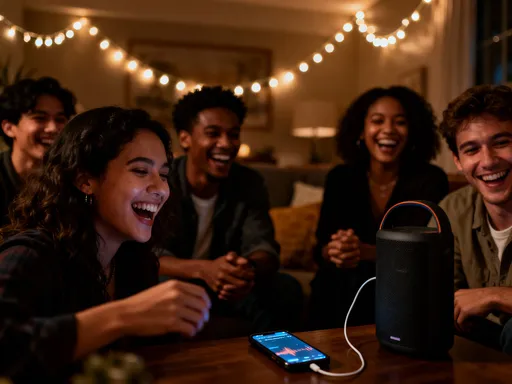
Then came the game. It started small—just a five-minute app we stumbled upon while trying to break our phone-scrolling habit. It wasn’t anything flashy. No epic graphics or complicated rules. Just a simple question: “Would you rather live without music or without movies?” We laughed. We debated. And suddenly, we were talking—really talking—about things we hadn’t discussed in years. I told him how I used to make mixtapes for road trips in high school. He admitted he’d once binge-watched an entire series in one weekend and felt weirdly guilty about it. It was silly. It was light. And it was exactly what we needed.
Here’s the thing I didn’t expect: that little moment of play didn’t just pass the time. It changed the energy between us. Scientists talk about how shared laughter releases oxytocin, the “bonding hormone,” and how light competition or surprise can trigger dopamine, the brain’s reward chemical. I’m not a neuroscientist, but I can tell you what I felt—lighter, more present, more connected. It was like a tiny emotional reset button.
Play isn’t just for kids. It’s a fundamental way humans build trust and intimacy. When we play, we drop our guard. We become curious. We’re more willing to be a little vulnerable, to share a quirky opinion, to tease without hurting. Games create a safe container for that. There’s a rule, a structure, a shared goal—even if it’s just to survive three rounds of absurd questions without laughing too hard. That structure makes it easier to open up, because the pressure is off. You’re not saying, “Let’s have a deep talk.” You’re saying, “Let’s play a game.” And somehow, that small shift makes all the difference.
I’ve noticed that even after the game ends, the conversation often keeps going. We’ll finish a round and one of us will say, “Wait, that question about traveling made me think—where would you actually go if money wasn’t an issue?” And just like that, we’re off on a new thread. It’s not forced. It’s not scheduled. It feels natural, like the game gave us a bridge to cross back into each other’s worlds. And the more we do it, the more those bridges multiply.
Choosing the Right App: Simplicity Over Complexity
Now, not every app works for couples. I made the mistake early on of downloading something that looked fun but turned out to be way too competitive. It had leaderboards, time limits, and a scoring system that made us both stressed after two rounds. We weren’t connecting—we were trying to win. And when one of us lost, it didn’t feel like a game anymore. It felt like a judgment. That’s not what we wanted.
What we’ve learned is that the best apps for couples aren’t the ones with the most features. They’re the ones that get out of the way. The ones that focus on interaction, not achievement. We started looking for apps that encouraged cooperation, curiosity, and conversation—not speed or precision. We wanted something we could pick up for five minutes, not something that demanded an hour of focus.
One type we love is question-based challenges. These aren’t the same old “What’s your favorite color?”—they’re more like, “What’s a skill you’ve always wanted to learn but never tried?” or “What’s one thing you’re secretly proud of?” The questions are designed to spark reflection, not just answers. And because they’re framed as part of a game, they don’t feel like an interrogation. They feel like an invitation.
Another favorite is cooperative puzzle games—simple ones where we have to work together to solve a riddle or complete a task. There’s no winner or loser, just two people figuring something out side by side. It’s amazing how much that small act of collaboration can mirror real-life teamwork. We’ve had moments where one of us spots a clue the other missed, and instead of feeling annoyed, we celebrate. “You got it! I never would’ve seen that.” That kind of positive reinforcement builds connection.
The key is accessibility. The app should be easy to learn, easy to start, and easy to stop. It shouldn’t require a tutorial or a big time commitment. And most importantly, it should feel good to play—not like another chore or performance. If it starts to feel like work, we put it down and try something else. Because this isn’t about gamifying our relationship. It’s about using play to rediscover each other.
Making It a Habit Without the Hustle
One of the biggest mistakes we made at first was thinking we had to set aside special time for this. “Let’s play after dinner,” we’d say, as if it were a scheduled event. But life gets busy. Dinner runs late. One of us is tired. The moment passes. The app stays closed.
What worked better was weaving the game into moments we were already sharing. Instead of adding something new to our day, we used the game to enhance what was already there. Now, it’s part of our coffee ritual in the morning. While the kettle boils, we pull out the phone and play one quick round. It takes less than three minutes, but it sets the tone for the day. We’re not just sharing space—we’re sharing attention.
Another favorite time is right after work, before we switch into “home mode.” We call it our “reconnect pause.” One of us says, “Ready for a quick game?” and the other knows it’s not just about the app—it’s about transitioning from work stress to being present with each other. It’s become a signal, like a tiny ritual that says, “I’m here now. Let’s be together.”
We also use it during mundane moments—while waiting for the laundry, during commercial breaks, or even in the car while parked. These are the gaps in the day that used to be filled with silence or phone scrolling. Now, they’re little opportunities to connect. And because the games are short, there’s no pressure to “finish” or “do it right.” We can stop anytime. That freedom makes it feel sustainable.
The goal isn’t perfection. It’s consistency. Even if we only play once a day—or three times a week—it’s enough to keep the conversation flowing. It’s not about how long we play, but how present we are during those moments. And over time, those small pauses add up to something bigger: a renewed sense of closeness, a habit of turning toward each other instead of away.
Turning Game Moments Into Real Talks
Sometimes, a game question seems trivial—“Would you rather have dinner with your younger self or your future self?”—but the answers can open doors. When my partner said he’d choose his younger self because he’d want to tell himself, “It’s going to be okay,” I felt my throat tighten. That wasn’t just a game answer. That was a window into a part of him I hadn’t seen in a long time.
That’s the magic of these apps: they don’t force deep conversations. They invite them. The playful format lowers the stakes. You’re not sitting across from each other saying, “We need to talk about our feelings.” You’re smiling, maybe a little competitive, answering a silly question—and then, almost by accident, you say something real.
I’ve learned things about my partner through these games that I never would’ve asked directly. His biggest fear isn’t spiders or flying—it’s letting people down. His happiest childhood memory isn’t a birthday or vacation—it’s baking cookies with his grandmother and burning the first batch. These aren’t earth-shattering revelations, but they’re intimate. They’re the kind of details that make a person feel known.
And the beautiful part? It goes both ways. When I share something unexpected—like how I still keep a journal of small wins, or how I sometimes imagine moving to a tiny coastal town—the conversation doesn’t end. He asks, “Why a coastal town?” And suddenly, we’re talking about dreams, values, what makes us feel peaceful. The game didn’t create the depth. It created the opening.
These moments don’t happen every time. Sometimes, we just laugh at a ridiculous “would you rather” and move on. And that’s okay. But even on those days, the act of playing together keeps the emotional door ajar. And when something real does come up, we’re already in the habit of listening, of being curious, of staying present.
Navigating Mismatches in Play Styles
Not every couple will love the same kind of game—and that’s okay. Early on, I realized I was more competitive than my partner. I wanted to win. He just wanted to enjoy the moment. At first, that created tension. I’d get too into it, and he’d shut down. I didn’t mean to pressure him, but I was so focused on the game that I missed how he was feeling.
What helped was adjusting our approach. We started choosing games that emphasized teamwork over competition. Instead of “who gets the most points,” we looked for “how can we solve this together.” That small shift changed everything. Now, when we play, it’s not about me proving I’m better—it’s about us figuring it out side by side.
We also set playful ground rules. “No teasing if someone gets an answer wrong.” “One do-over per round.” “If one of us says ‘let’s stop,’ we stop.” These aren’t strict rules—they’re agreements to protect the mood. Because the goal isn’t to win. It’s to feel good while we’re together.
If one of us isn’t in the mood, we don’t push it. Some days, the other person might say, “Not tonight,” and that’s respected. We’ve learned that forcing play kills the joy. But what’s surprising is how often the one who says “no” ends up suggesting a game a few days later. It’s not about constant participation—it’s about creating a space where both people feel safe to join in when they’re ready.
The truth is, every couple has differences in how they engage. One might love structure. The other might prefer spontaneity. One might enjoy challenges. The other might crave ease. And that’s not a problem—it’s an opportunity. When we honor those differences instead of trying to change each other, we build a deeper kind of connection: one that’s not just about shared interests, but about mutual care.
When Fun Becomes a Bridge, Not an Escape
There was a time when our phones were barriers. We’d sit together, each lost in our own digital world, using screens to avoid the quiet, to fill the space without really connecting. I didn’t realize how much that was costing us until we started using those same devices to do the opposite—to lean in, to play, to talk.
That shift—from using tech to escape each other to using it to connect—has been transformative. The same device that once pulled us apart now brings us together. It’s not about the app. It’s about the intention behind it. When we open that game, we’re not just playing. We’re saying, “I choose to spend this moment with you. I’m curious about you. I want to hear your voice, see your smile, share a laugh.”
These small rituals have become anchors in our day. They don’t solve every challenge or answer every question. But they remind us, again and again, that we’re a team. That we can still surprise each other. That love isn’t just about big gestures—it’s about the tiny, consistent choices to stay close.
If you’re sitting in silence with someone you care about, know this: you’re not broken. You’re human. And sometimes, all it takes is a simple game to reopen the door to conversation. You don’t need a dramatic intervention. You don’t need to overhaul your relationship. You just need a moment of play, a spark of curiosity, a willingness to try.
Because connection isn’t always loud. Sometimes, it starts with a whisper—a shared laugh, a silly question, a quiet “I never knew that about you.” And from there, the conversation begins to flow again, not because you forced it, but because you made space for it. And that, more than anything, is what keeps love alive.