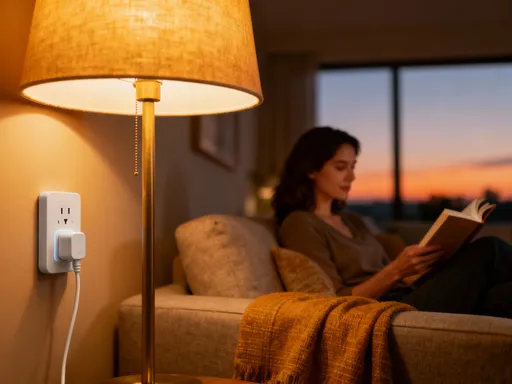
Tired of Coming Home to High Bills and Wasted Energy? Here’s How Smart Power Control Makes Life Easier
We’ve all been there—rushing out the door, only to wonder halfway to work: Did I turn off the iron? Or dreading the monthly electricity bill because the AC ran all day. What if your home could remember for you? Not just save energy, but actually help you feel more in control, more peaceful, and a little smarter every day? This isn’t about complicated tech—it’s about simple, thoughtful tools that quietly support your routine. They don’t take over your life; they make space in it. And for so many of us juggling work, family, and self-care, that extra breathing room can make all the difference.
The Moment You Realize You Left Something On (And It’s Not Just About the Cost)
It hits you when you’re stuck in traffic or halfway through a meeting: the toaster oven was left on. Again. Your chest tightens. It’s not just about the extra dollars on the bill—though that adds up. It’s the mental clutter, the nagging voice in your head that says, “You should’ve checked.” That tiny moment of forgetfulness spirals into a full-blown worry loop. Could it be a fire hazard? Is the house getting too hot? Should I drive back?
This kind of stress isn’t rare. In fact, it’s part of the invisible load so many of us carry—especially those managing homes and families. We’re the ones remembering doctor appointments, school events, birthdays, and yes, whether the curling iron is unplugged. It’s exhausting. And the irony? We’re doing all this to keep our homes safe and comfortable, yet we end up feeling anything but.
Now imagine a world where that worry doesn’t have to live rent-free in your mind. What if your home could help you manage those small but critical tasks? That’s where smart power control comes in—not as a futuristic fantasy, but as a gentle, practical support system. It’s not about replacing your attention; it’s about backing you up when life gets loud and busy. When you can trust that your appliances are being watched, even when you’re not, it’s like lifting a small but heavy weight off your shoulders.
And let’s be honest—none of us want another thing to manage. We don’t need another app that demands constant updates or a device that beeps at us. What we need is something that works quietly in the background, like a trusted friend who knows when to step in. Smart power solutions do exactly that. They don’t ask for much, but they give a lot: confidence, safety, and a little more peace in your day.
How Smart Power Remembers So You Don’t Have To
Think of smart power devices as your home’s quiet memory keepers. They don’t judge you for forgetting. They don’t nag. They simply notice patterns and act—without drama. A smart plug, for example, can learn that your living room lamp usually goes off by 10 p.m. If it’s still on at 11:30, it can send a gentle alert to your phone: “Hey, did you mean to leave this on?” Or better yet, it can turn off automatically, just like you would.
These devices use simple technology—like Wi-Fi or Bluetooth—to connect to an app on your phone. Once set up, they can monitor energy use, detect when something’s running longer than usual, and even estimate how much electricity each device is using. Over time, they build a picture of your daily rhythm. Maybe your coffee maker turns on every morning at 6:45. Your bedroom fan runs until 7:15, then shuts off. The system learns these habits and starts to protect them.
One of the most powerful features is remote control. Imagine you’re at your daughter’s soccer game and suddenly remember the iron is still on. Instead of cutting the game short or driving home, you pull out your phone, open the app, and tap “off.” Done. No panic. No disruption. Just calm, quiet control.
And it’s not just about turning things off. Some smart outlets can turn devices on at the right time, too. Picture your slow cooker starting dinner at 4 p.m. so it’s ready when the kids walk in from school. Or your heater warming up the bathroom 15 minutes before your morning shower. These aren’t luxuries—they’re small acts of care that make your home feel more thoughtful, more in tune with your life.
The beauty of it? You don’t have to change how you live. These tools adapt to you. They don’t require you to become a tech expert or spend hours programming. Most setups take less than 10 minutes. You plug in the device, connect it to your home network, and follow a few simple steps in the app. That’s it. From there, it just works—learning, adjusting, and helping without asking for anything in return.
From Chaos to Calm: Real Stories of Daily Relief
Sarah, a school counselor and mom of two, used to spend her mornings in a blur of lunches, backpacks, and last-minute homework checks. One day, after dropping her kids at school, she got a text from her neighbor: “Smoke alarm going off at your house?” Her heart dropped. She rushed back—only to find the oven had been left on since the night before. Nothing caught fire, but the experience shook her. She couldn’t stop thinking, “What if it had?”
That’s when she started using smart plugs. She began with her oven and space heater—two devices she knew could be risky if left on. Now, if she forgets to turn them off, the app alerts her. Even better, she set a rule: the oven turns off automatically after two hours. It’s not that she’s careless—she’s just busy, like so many of us. This small change didn’t just save energy; it gave her back a sense of safety.
Then there’s James, a freelance writer who works from home. He loves his desk fan, but he’d often leave it running all night—sometimes for days. His electricity bill was rising, and he felt guilty. He didn’t want to waste energy, but he kept forgetting. After setting up a smart plug, he created a schedule: the fan turns off at 11 p.m. unless he overrides it. Now, he sleeps better knowing it won’t run all night. And he’s saved nearly $30 a month—money he’s putting into a college fund for his niece.
These aren’t isolated cases. Thousands of people are using smart power tools to reduce stress, not just bills. One woman uses a smart outlet to turn off her son’s video game console after two hours of play. A retiree uses one to power down his workshop tools automatically. A single mom schedules her washer to run during off-peak hours to save money. These stories aren’t about high-tech homes—they’re about real people finding simple ways to feel more in control.
What’s striking is how often the emotional benefit outweighs the financial one. Yes, saving $15 or $20 a month matters. But what really changes is the mental load. When you stop second-guessing yourself, when you trust that your home has your back, you feel lighter. More present. More like yourself.
Setting It Up Without the Stress: A Beginner-Friendly Guide
If the idea of smart home tech makes you nervous, you’re not alone. The thought of apps, passwords, and complicated setups can feel overwhelming—especially when you’re already juggling so much. But here’s the truth: getting started with smart power control is easier than you think. You don’t need to rewire your house or become a tech wizard. You just need one outlet and five minutes.
Start small. Pick one device you often forget to turn off—a coffee maker, a lamp, a fan. Buy a smart plug—many reliable brands offer them for under $20. Plug it into the wall, then plug your device into the smart plug. Next, download the companion app (most work with iOS and Android) and follow the setup steps. It usually involves connecting the plug to your Wi-Fi network. Once it’s connected, you can control it from your phone.
Now, try a simple schedule. Set your coffee maker to turn on at 6:30 a.m. and off by 9 a.m. Or program your bedroom lamp to shut off at 10:30 p.m. to support better sleep. You can even set “away” modes—if you’re on vacation, schedule all non-essential devices to turn off during the day.
Want even more convenience? Many smart plugs work with voice assistants like Alexa or Google Assistant. Just say, “Turn off the living room lamp,” and it happens. No phone, no app, no hassle. This is especially helpful if your hands are full—maybe you’re holding groceries or helping a child with homework.
The key is to grow at your own pace. Add one plug this week. Try it for a few days. See how it feels. If it helps, add another next month. Focus on the devices that cause you the most stress or cost the most to run. Over time, you’ll build a system that fits your life—not the other way around.
And remember: it’s okay if it doesn’t work perfectly at first. Technology is a tool, not a test. If you forget to set a schedule, that’s fine. If the app glitches, you can restart it. The goal isn’t perfection—it’s progress. Every small step you take is a win for your peace of mind.
Beyond Savings: How Energy Smarts Support Bigger Life Goals
Let’s talk about money—but not just the monthly bill. Saving $20 a month might not sound like much. But over a year, that’s $240. That could be a weekend getaway, a family dinner out, or a contribution to a savings goal. And if you expand smart power to multiple devices—AC, water heater, lighting—the savings grow. Some households report cutting their energy bills by 10% to 20% in just a few months.
But the real value isn’t just in the dollars. It’s in what those savings represent: freedom. Freedom from constant worry. Freedom to focus on what matters—your health, your relationships, your dreams. When your home handles the small stuff, you have more mental space to think, plan, and breathe.
Think about sleep. If your bedroom is too warm or your fan runs all night, it can disrupt your rest. With a smart plug, you can set your fan to turn off after you fall asleep. Or program your heater to warm the room just before bedtime, then cool it down for deeper sleep. Better sleep means more energy, better mood, and clearer thinking during the day.
Or consider family time. How many evenings have been ruined by someone forgetting to turn off the TV, only to hear the scolding words, “I told you to turn it off!”? With smart scheduling, the TV can shut down automatically at 8 p.m., making room for board games, conversations, or quiet reading. No arguments. No reminders. Just harmony.
And let’s not forget safety. For parents, empty nesters, or anyone concerned about fire risks, knowing that high-wattage devices turn off automatically is a powerful comfort. It’s not about fear—it’s about care. It’s about designing a home that protects everyone in it, even when you’re distracted or asleep.
When you look at it this way, smart power isn’t just a tech upgrade. It’s a lifestyle choice—one that supports your well-being, your goals, and your values. It’s about creating a home that feels more intentional, more peaceful, and more supportive of the life you want to live.
Choosing What Fits—Without the Overwhelm
Walking into a store or browsing online, it’s easy to feel lost. There are dozens of brands, models, and features. Some promise voice control, energy reports, motion detection, and more. How do you choose without getting overwhelmed?
The answer is simple: start with your pain point. What keeps you up at night? Is it forgetting to turn off the iron? High summer bills from the AC? Worries about your elderly parent living alone? Let that guide your decision.
If forgetfulness is your main issue, look for smart plugs with strong app alerts and automatic shut-off features. If you want to save money, choose devices that show real-time energy usage or offer scheduling for off-peak hours. If safety is your priority, pick plugs with overload protection and remote monitoring.
Stick to well-known brands with good customer reviews. Look for devices that work with the tools you already use—like your smartphone or voice assistant. Avoid gadgets with too many bells and whistles. You don’t need a plug that changes colors or plays music. You need one that works reliably, connects easily, and disappears into your routine.
Also, consider ease of use. The app should be intuitive, with clear buttons and simple menus. If setting it up feels like solving a puzzle, it’s probably not the right fit. Technology should serve you—not confuse you.
And don’t feel pressured to buy everything at once. Start with one or two plugs. Test them for a few weeks. See how they fit into your life. If they help, expand slowly. The best systems grow with you, adapting to your changing needs without demanding your constant attention.
Remember: the goal isn’t to have the smartest home on the block. It’s to have a home that helps you feel calmer, safer, and more in control. That kind of intelligence doesn’t come from flashy features—it comes from consistency, reliability, and thoughtful design.
Making Your Home a True Partner in Everyday Life
A truly smart home isn’t one filled with gadgets. It’s one that understands you. That anticipates your needs. That supports you without asking for anything in return. Smart power control is a small but powerful step toward that vision. It’s not about replacing human care—it’s about enhancing it.
When your home remembers to turn off the lights, it’s not just saving energy. It’s giving you permission to forget. To focus on your child’s school play instead of worrying about the stove. To enjoy a long walk without checking your phone every five minutes. To trust that things are okay, even when you’re not watching.
That trust is priceless. It’s the foundation of peace. And peace—real, daily peace—is something we all deserve. We spend so much of our lives managing, organizing, and protecting. What if some of that work could be shared? What if your home could be more than a place you return to—what if it could be a quiet partner in your life?
That’s the promise of smart power. It’s not flashy. It doesn’t demand attention. But every time it turns off a forgotten lamp or alerts you to an appliance left running, it’s saying, “I’ve got this. You can rest now.”
And in a world that never slows down, that kind of support can change everything. It doesn’t make you lazier. It makes you freer. Freer to think, to love, to live. Because when the small things are handled, the big things—your dreams, your relationships, your joy—finally have room to grow.
So take that first step. Plug in one device. Set one schedule. See how it feels. You might be surprised at how much a little technology can do—not to change your life, but to make it feel a little lighter, a little brighter, and a lot more like your own.